Improving Quality Inspection with AI Vision: A Practical Defect Detection Case
How AI Vision reduces manual inspection variation and what to prepare before starting: data, cameras, lighting, and acceptance criteria.
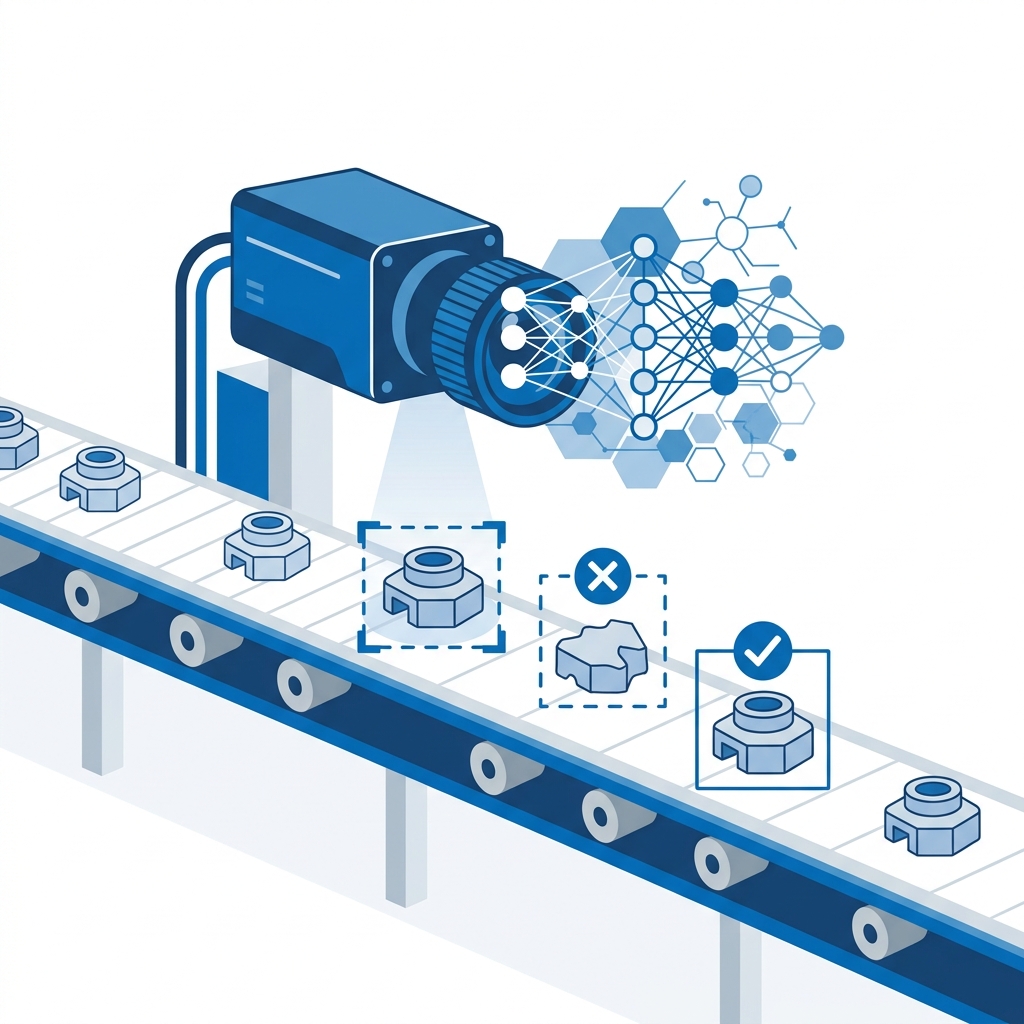
Human quality inspection is still necessary in many factories, but fatigue and inconsistent judgment become risks as product volume rises. AI Vision works well for repeatable inspection tasks that need the same standard across every part.
Where AI Vision Fits
AI Vision is suitable for defect detection, counting, color checks, position checks, label verification, and product classification. Before starting, the team should confirm whether good and defective parts can be separated clearly in images.
What to Prepare
- Images of good and defective parts in multiple variations
- Stable lighting conditions
- Production line speed and decision time
- Quality criteria accepted by the QC team
- Integration point with PLC, dashboard, or reject mechanism
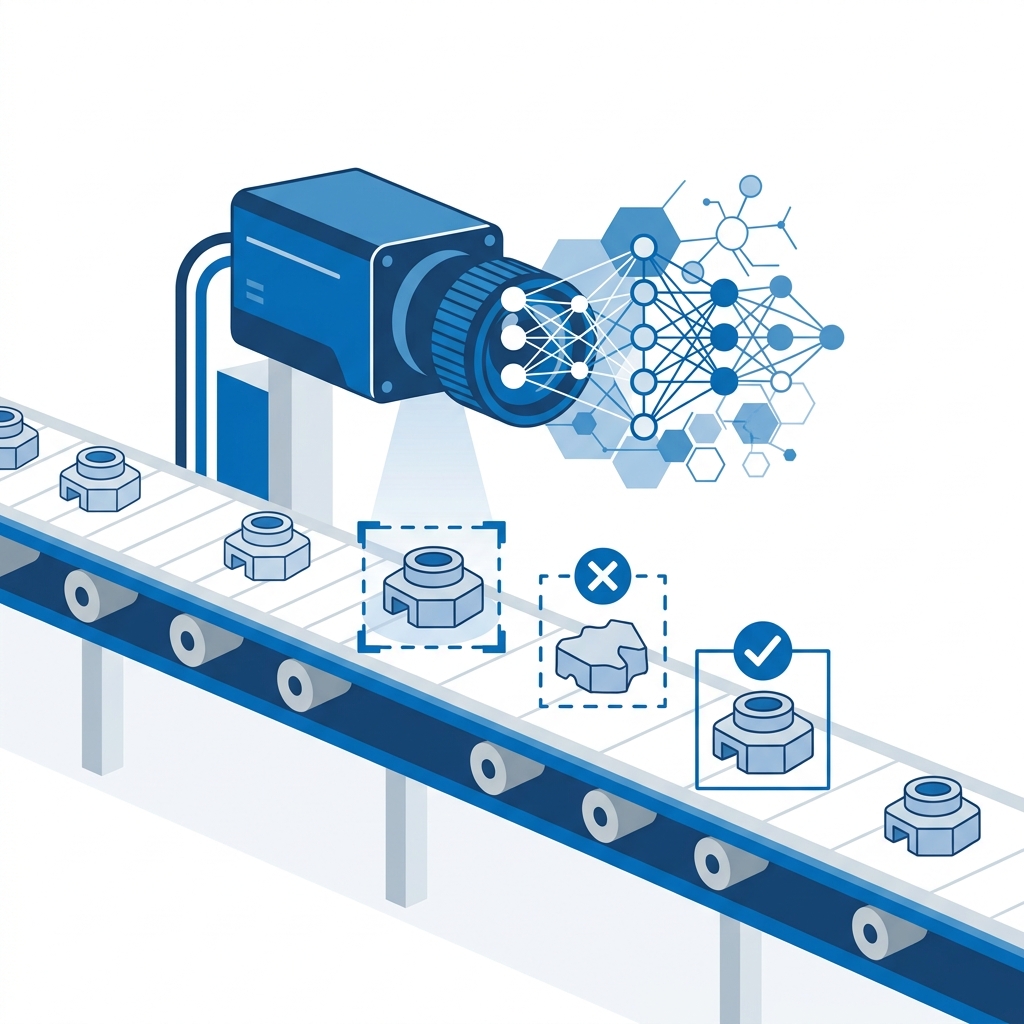
Start with a Pilot
A pilot helps measure whether the model can detect the target defects before committing to full hardware and deployment. Key numbers include accuracy, false reject, false accept, and processing time per item.
Expected Result
A well-designed AI Vision system reduces repeated inspection work, improves consistency, and creates historical quality data. Human review should still be part of the flow when the model is uncertain.
Want to build the right system for your business?
Our engineering team can assess the site, define a practical scope, and help select the right path before full development.